
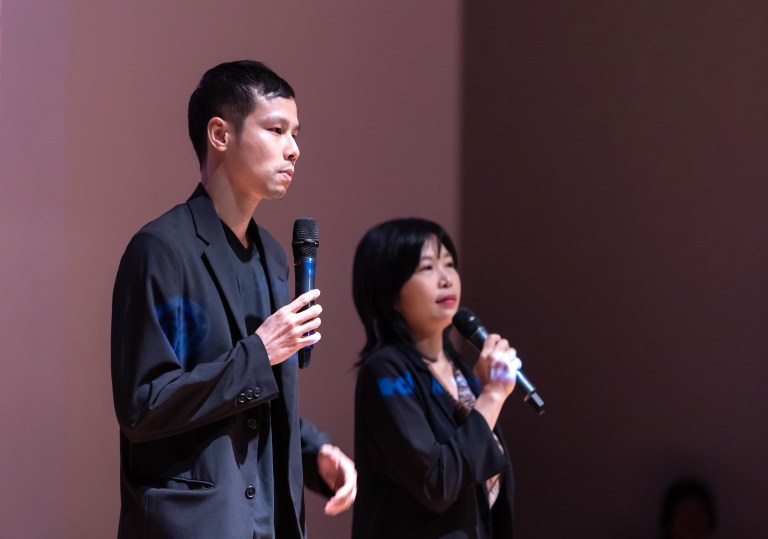
“The Educators aspiring to transform the next generation of architects.”
Today, Dsign Something had the opportunity to interview HAS design and research (Poh, Kulthida Songkittipakdee and Jerry, Jenchieh Hung) about their new role at Kunming University of Science and Technology, one of Asia’s leading architecture universities.. They have been appointed as Lifetime Honorary Professors, the highest honor for visiting faculty, serving as a “bridge” connecting international design standards with the foundation of architectural education for Thai students.
We asked the HAS design and research team many deep questions, ranging from behind-the-scenes insights into intense world-class classrooms and bringing real-site experiences back to the university, to their perspective on the “New Generation of Architects.” In a world spinning fast with technology, what are the “Survival Skills” that universities might not teach, but real life demands?
Join us in finding the answers and discovering the heart of the modern architect, something AI can never replace, in this interview.

Dsign Something: First, could you expand on the title “Lifetime Honorary Professor”? What is it, and what role does HAS design and research play in the global educational context?
HAS (Jenchieh Hung): For me, the title of Lifetime Honorary Professor is not just a rank or an honorary academic decoration. It functions as a very important “Bridge.” Usually, we see the Academic World and the Practical World as distinctly separate, but this position confirms that we can connect these two worlds.
It is a balance point stating that our entire experience, whether as practicing architects, exhibition curators, writers, or researchers, does not end at the construction site. Instead, it is passed on as a body of knowledge within the university worlds.

HAS (Kulthida Songkittipakdee): As for the name HAS design and research, it stems from the fact that our work places immense importance on Research. In the current era, media and clients have changed. Designing based solely on “instinct” or the feeling that something is beautiful is no longer enough.
Research is the process of transforming abstract feelings into “Visual Knowledge”, knowledge that is tangible and proven. This Lifetime Honorary Professor title acts as a guarantee that our Research-based thinking process is accepted on an international level.
Dsign Something: How did your journey as Visiting Professor and Adjunct Professor begin? You are very busy with work; why carve out time to teach?
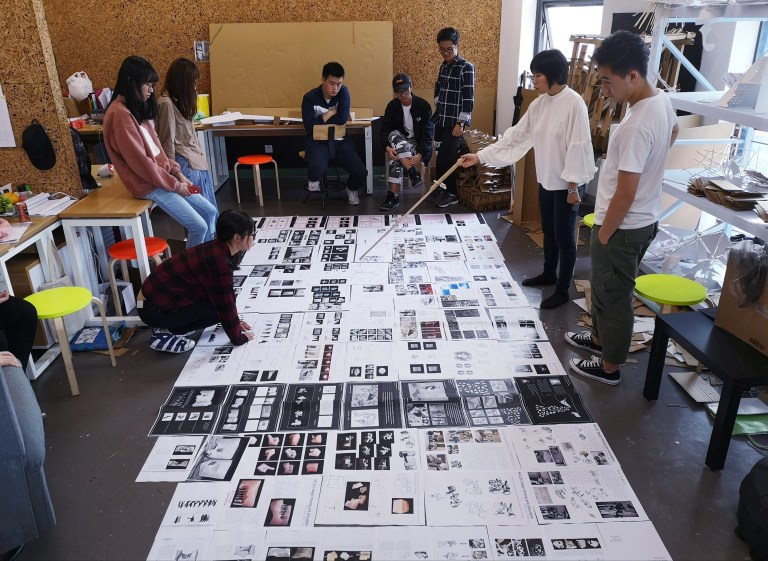
HAS (Kulthida Songkittipakdee): Actually, we started as Design Critics in Architecture, reviewing student work for over 10 years. But the official start, I began teaching at Xi’an Jiaotong-Liverpool University, an international program accredited by the Royal Institute of British Architects (RIBA). Teaching students in China within an international context was the turning point that made us feel, “Teaching is fun.”
Dsign Something: And how does the fun of teaching differ from actual work?
HAS (Kulthida Songkittipakdee): The fun of teaching is different from working. When working, we talk to clients who have a certain level of life experience; we can speak the language of business. But when becoming a teacher or professor, the first thing we must Reskill is “Patience.”
We have to constantly think about how to digest difficult structural topics or complex concepts so that beginners can understand them without feeling discouraged first. It is a challenge to train ourselves to convey what we do in a way that looks “easy” for them, so they have the courage to keep learning.

Dsign Something: From your teaching experience abroad, especially at Tongji University, is there a learning model that is interesting and should be adapted for Thailand?
HAS (Jenchieh Hung): I must mention that Tongji University is a top-ranked university globally and is highly international, and this year it was ranked 11th in the QS World University Rankings for Architecture. What impressed me and what I want to see in Thailand is the “Master Class” system.
In this system, they screen students who have good grades, diligence, and most importantly, “Passion to truly be an architect” to have the right to choose a studio paired with a Professor who is a Professional Architect or a renowned designer. This system is a Win-Win for both parties. The professors don’t waste time with students who don’t want to learn, and the students with fire in them get to learn from the real deal.
For example, when I taught, I gave Chinese students a project based on a real site in Chonburi, Thailand. They had to research across borders, check Google Maps, and study an unfamiliar context. This trains them to be ready for the real working world.
The philosophy is “Learning doesn’t stop at graduation.” Learning doesn’t end when you receive your degree; you must learn from working professionals for the rest of your life.

Dsign Something: In an era where the world changes fast and AI is involved, what is the “Heart” of Thai architecture that students should Reskill to survive?
HAS (Jenchieh Hung): I see software skills or technical skills as learnable things that AI is starting to do for us. But the “Heart” that AI will never have, and that students must build immediately starting today, are these 3 things: Empathy, Perception, and Passion.
Empathy: You must have feelings for others, for society, and for the environment.
Perception: Amidst massive amounts of data, you must receive the suitable and what your Mindset is regarding various issues.
Passion: This is the most important. But if you have all 3 of these, you will be an architect who creates value for this world, something only a human can do.
Because architecture is a “Real War.” You have to fight with budgets, fight with the climate, fight with on-site problems. If you don’t have Passion as fuel, you will just be a “Robot” producing drawings on command.

Dsign Something: Over the past 20 years, and as a Professor, what fulfills your feelings the most?
HAS (Kulthida Songkittipakdee): For me, the most fulfilling thing is “Seeing the spark in the kids’ thoughts change.” We have to admit that when we first go in to teach, some kids might not see the picture or feel that it’s too hard. But when we try to digest the hard stuff into something simple, adding understanding and patience…
Until the point where it “Clicks” for them, and they can create work that even they didn’t think they could do. That moment is the reward of being a teacher.
HAS (Jenchieh Hung): Being able to teach kids to see “The Real World.”
In university, design often ends at paper or models. But in reality, architecture is part of the city; it is something people must touch, use, and live with. Bringing experience from the real field to share with students so they can visualize what they will face, that is our pride.
From another angle, I view architecture as a “Window” used to view the world from a different perspective. Even if the students I teach don’t all become architects, some might become writers or scientists, the architectural “Thinking Process,” the questioning, problem-solving, and systematic thinking, will stick with them in other professions. Seeing them grow and have a strong thought process is what fulfills me most as a teacher.
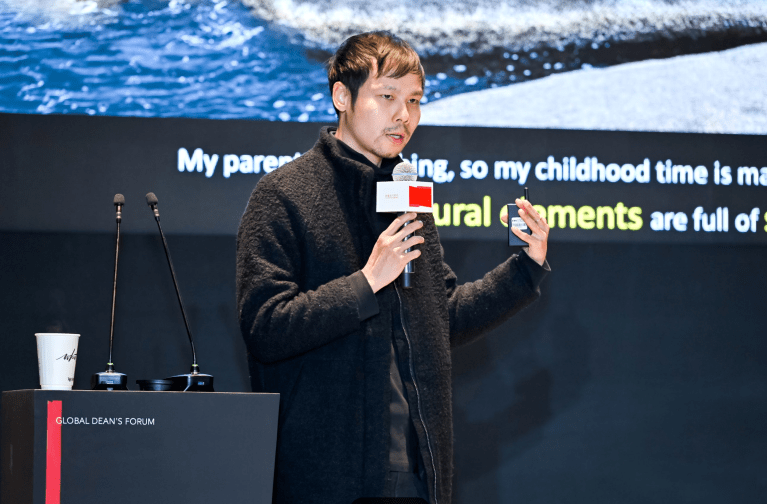
Dsign Something: Finally, what would you like to leave with the “New Generation of Architects” who want to take Thai design to the global stage?
HAS (Jenchieh Hung): I want to leave a short phrase: “One person is not enough.”
A talented person alone cannot change the world or move the industry very far forward. We need an ecosystem of working people who have Empathy and Passion coming together.
If you have Passion, your friends have Passion, and we create a Circle of architects determined to create good things for society, the power of this group is what will push Thai design to be accepted globally. Don’t look just at personal success, but look at how we can be a part of driving this industry forward together.
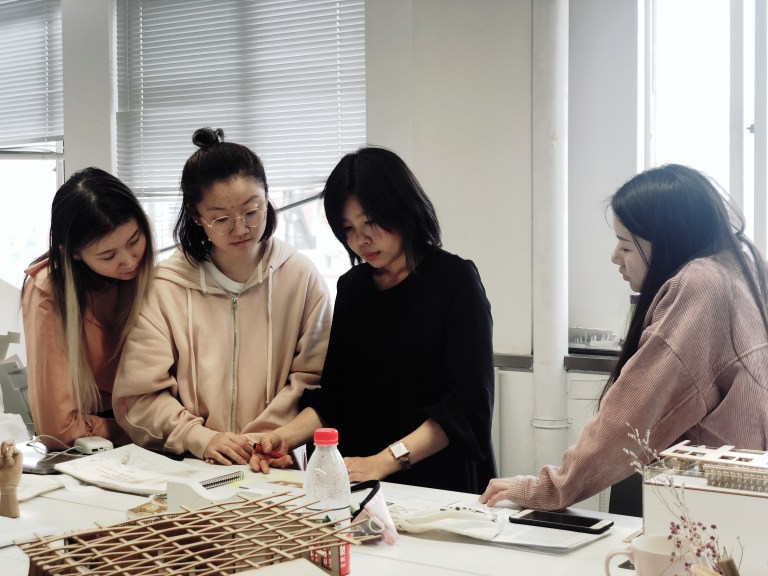
HAS (Kulthida Songkittipakdee): For me, I want to leave a message about “Patience” and “Determination.” Thai kids or Thai architects have skill, creativity, and attention to detail that is second to none in the world. I would like to emphasize Critical Thinking and rigorous Research as key supports for design thinking
I want the younger generation to be confident that what they are doing is good, but they must constantly replenish their knowledge and find reasons to support their designs to make them solid. Don’t be afraid to take yourself out to face the wide world. If we train ourselves to be ready, have clear Passion, and believe in our potential, I believe Thai architects can definitely go far on the global stage.
Because past experience teaches that the only thing that makes every effort come true is to have “Patience, Patience, and Patience.” Keep doing it with intention.
Read Thai Version: Click Here

รับข่าวสารเรื่องการออกแบบ สถาปัตยกรรม ไลฟ์สไตล์
ทางอีเมล ที่จะส่งตรงถึงคุณทุกเดือน ลงทะเบียนได้ที่ด้านล่างนี้เลย!
Subscribe now to keep reading and get access to the full archive.